Why Two Dentists Look at the Same Mouth and Give Different Plans
Published · Updated
Two dentists can look at the same mouth and write different plans because a lot of early decay sits in a gray zone, where one dentist watches it and another fills it. That usually means they drew the line in a different place, not that one of them is lying to you. The useful move is to find out where each one drew the line, and why.
Key Takeaways
- Early decay that has not yet made a hole in the tooth can sometimes be stopped with fluoride instead of a filling, so one dentist may treat a spot that another would watch.
- A dentist working from fresh X-rays, a camera image or a 3D scan can see things a dentist working from a quick look and old films cannot.
- The best question to ask about any line on a plan is what happens if you wait, and how soon you would know.
- A plan that labels every item urgent and cannot explain why is a better reason for doubt than a plan that simply finds more.
- Dentists in Nevada are licensed by the Nevada State Board of Dental Examiners, which is also where patient complaints go.
Why would one dentist find four cavities and another find none?
Most of the time, the spots in question are small and early. According to the National Institute of Dental and Craniofacial Research, decay caught before a hole forms can be stopped or reversed, and a dentist can apply fluoride at that stage. Once a cavity forms, a filling is the usual fix.
So the argument is often about timing. One dentist sees an early spot and wants to fill it now. Another sees the same spot and wants to check it again at the next visit. Both are defensible calls.
A few other things push two exams apart:
- Different images. New X-rays taken today versus films from two years ago can show different things.
- Different tools. A camera image blown up on a screen shows cracks and stains a mirror can miss.
- Your history. Someone who gets a new cavity every year tends to get a shorter leash than someone who has not had one in a decade.
Where does honest disagreement end and overtreatment start?
Disagreement about early spots is normal. What should make you uneasy is a pattern, not a number.
Be wary if every item is marked urgent, if nobody can show you the problem on an image, or if you are pushed to decide in the chair that day. A careful plan says which items can wait and what would change the answer. Our post on how to read a dental treatment plan walks through the lines worth checking.
A bigger plan is not proof of bad faith on its own, either. Sometimes the first office missed something, and sometimes it was watching it on purpose. Ask before you assume.
What should you ask when the plans don’t match?
Ask each dentist the same four questions, and write the answers down.
- Can you show me this on the X-ray or the camera image?
- Is this decay through the enamel yet, or still on the surface?
- What happens if we wait and look again at the next visit?
- Which items would you do first if I can only do some of them?
A dentist who is comfortable with those questions is telling you something about how they work. If you want a third view, our guide to getting a dental second opinion covers how to ask for your records.
If you believe a Nevada dentist has done something wrong, the Nevada State Board of Dental Examiners licenses dentists here and is where patient complaints go. Most disagreements never need to get that far.
How we show you what we see
We would rather show you than ask you to take our word for it. Our office uses an intraoral camera that puts your tooth on a screen, so a crack or a dark spot is something you can look at yourself. We also use digital X-rays and cone beam CT, a 3D scan.
Watching a spot only works if somebody looks at it again, which is a big part of what a regular check-up is for. If it needs work, tooth-colored fillings and sealants are the usual answer for small decay.
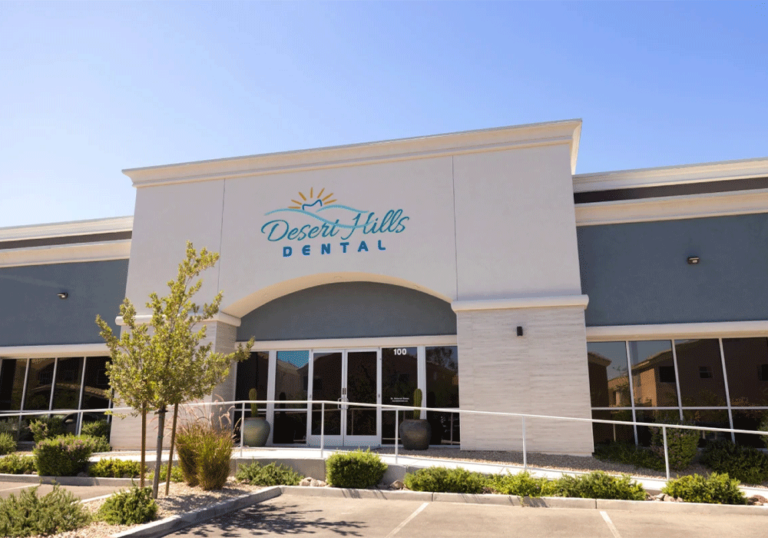
Patients come to our Spring Valley office in Southwest Las Vegas from Rhodes Ranch, Summerlin and Enterprise.
To talk it through, call (725) 307-5569 or request a visit through the contact page.
Frequently Asked Questions
Is my dentist scamming me if they found cavities my last dentist didn’t?
Not necessarily. Early decay is a judgment call, and two honest dentists can disagree about whether a small spot needs a filling now or a closer look later. Newer images can also show things older ones did not. Ask to see each spot on an X-ray or camera image and ask what happens if you wait. A clear answer is a good sign.
Can a small cavity be watched instead of filled?
Sometimes. Decay that has not yet broken through to form a hole can be stopped or reversed with fluoride, according to the National Institute of Dental and Craniofacial Research. Whether your spot is at that stage is something your dentist has to judge from the exam and images. If they suggest watching it, ask when they will check it again.
Why didn’t my old dentist mention these cavities?
They may have been watching early spots and not flagged them as problems yet. They may have had older X-rays to work from. Or they may have missed them. You can ask your old office for your records and X-rays and compare the dates. That usually answers the question faster than guessing.
Who handles complaints about dentists in Nevada?
The Nevada State Board of Dental Examiners licenses dentists in Nevada and is the place to take a complaint. Its website is dental.nv.gov. For most treatment plan disagreements, a direct conversation with the office or a second opinion sorts it out first.
How can I see what the dentist is seeing?
Ask for it. Many offices, ours included, use an intraoral camera that shows your tooth on a screen, plus digital X-rays. Seeing a crack or a dark spot yourself makes it much easier to judge whether a line on your plan makes sense. If an office will not show you, that is worth noting.