Wisdom Teeth in Your 20s: When Enterprise Patients Should Have Them Removed
Published
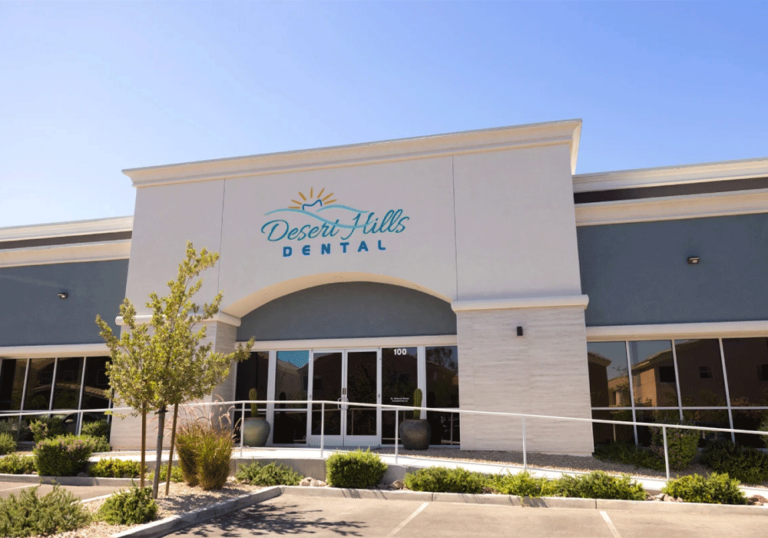
Wisdom teeth should come out when they’re causing a problem, or when an X-ray shows one starting: pain, infection, decay you can’t fix, gum disease, a cyst, or damage to the molar next door. If yours have come in straight, stay healthy and you can clean around them, keeping them is a reasonable choice, as long as someone keeps checking them. At Desert Hills Dental, on South Fort Apache Road in Spring Valley, we offer wisdom teeth removal and regular checkups.
Your 20s matter because this is the decade when that call gets harder to put off. The roots keep growing, and a tooth that’s simple to remove in your late teens can be a tougher job later. If you’re in Enterprise and a dentist just raised yours, here’s how to think it through.
Key Takeaways
- The American Association of Oral and Maxillofacial Surgeons says wisdom teeth usually come in between ages 17 and 25.
- MedlinePlus says an impacted wisdom tooth that isn’t causing problems may need no treatment at all.
- The AAOMS, the oral surgeons’ association, lists infection, gum disease, cavities that can’t be restored, cysts and damage to neighboring teeth as reasons for removal.
- Wisdom teeth you keep still need professional cleanings, a yearly checkup and periodic X-rays, according to the AAOMS.
When do wisdom teeth actually need to come out?
When there’s a problem you can point to. The AAOMS page on monitoring wisdom teeth lists the signs that point to removal: gum disease or other infection, cysts or tumors, cavities that can’t be restored, and damage to neighboring teeth.
The Merck Manual’s page on impacted teeth says most impacted teeth are wisdom teeth, since they arrive last and the jaw often lacks room. Impacted teeth can get infected and do little for chewing.
| Your situation | Usual next step | Question to ask |
|---|---|---|
| Fully in, healthy, easy to clean | Keep it and keep checking it | How often should we X-ray it? |
| Impacted, no symptoms | Watch it, or remove it early | What do the roots look like on the X-ray? |
| Partly through, gum sore or swollen | Usually removal | Is it infected right now? |
| Decay on it that can’t be restored | Removal | Is the tooth next to it affected too? |
| Damaging the molar in front | Removal | How much damage is there already? |
Why does your age change the answer?
Roots. MedlinePlus on impacted teeth says removal before 20 often has better results, because the roots aren’t fully formed, and that with age they grow longer and curved. The AAOMS symptoms page adds that longer roots can end up close to the nerves of the lower jaw or the sinus above the upper teeth, which makes a later extraction harder.
That doesn’t mean everyone in their 20s should book surgery. MedlinePlus says impacted wisdom teeth are very common and often cause no problems. The surgeons’ association leans harder toward taking them out early. Your own X-ray is what settles it, and if two offices disagree, our second opinion guide helps.
Mine don’t hurt. Can I leave them?
Sometimes, as long as someone keeps checking them. The AAOMS puts it plainly: pain-free doesn’t mean disease-free. They sit where floss struggles to reach, so decay and gum trouble can build without any pain.
If you keep yours, the AAOMS says that means regular professional cleanings, a checkup every year and X-rays from time to time. We use digital X-rays at our office.
What signs mean you should call?
The AAOMS lists these as common signs of a problem wisdom tooth:
- Tender or bleeding gums.
- Red or swollen gums.
- Jaw pain or swelling.
- Bad breath or an unpleasant taste in the mouth.
- Trouble opening your mouth.
Jaw swelling means get care that day. We reserve time for same-day appointments, and if no dental office can see you, go to an emergency room, as our emergency dentistry page explains.
Who does the extraction, and how long is recovery?
It varies. The Merck Manual says removal is often done in a dentist’s office, awake with a local anesthetic or a sedative, and sometimes in a hospital. MedlinePlus says it’s most often done by an oral surgeon.
The downtime is often short. The AAOMS wisdom teeth FAQ says many patients get back to normal activities the day after surgery and to normal life within a week, though full healing can take up to six weeks.
Seeing a dentist from Enterprise?
Enterprise is an unincorporated town in Clark County that grew from 14,676 people at the 2000 census to 221,831 in 2020. It takes in Mountain’s Edge, and mailing addresses there say Las Vegas. Its northern neighbor is Spring Valley, where our office sits at 6740 S Fort Apache Rd, Ste 100, Las Vegas, NV 89148. Our Enterprise patients page has more on visiting us.
Desert Hills Dental is a general and family dental office with three dentists, Deborah Staten, Fatima Nepacena and Janika Ross, who all hold a DMD. We offer wisdom teeth removal along with other tooth extractions, and sedation dentistry if you’re nervous. We’re insurance friendly with most PPO plans.
Call (725) 307-5569 or use our contact page to book a visit.
Frequently Asked Questions
What age should wisdom teeth come out?
There’s no single age. They usually come in between 17 and 25, according to the AAOMS. MedlinePlus says removal before 20 often has better results because the roots aren’t fully developed.
Do wisdom teeth have to come out if they don’t hurt?
Not always. MedlinePlus says an impacted wisdom tooth that isn’t causing problems may need no treatment. The AAOMS warns that pain-free doesn’t mean disease-free, so wisdom teeth you decide to keep still need regular cleanings, a yearly checkup and periodic X-rays.
Is it harder to remove wisdom teeth in your late 20s?
It can be. MedlinePlus says the roots grow longer and curved with age. The AAOMS says longer roots can sit near the nerves of the lower jaw or the sinus, which makes a later extraction harder and raises the chance of complications.
How long does wisdom tooth recovery take?
The AAOMS says many patients return to normal activities the day after surgery and to normal life within a week. Full healing can take up to six weeks. Skip straws for at least a full day and strenuous activity for at least a week.
Can I be sedated for wisdom tooth removal?
It’s worth asking. The Merck Manual says office removals are done with a local anesthetic or a sedative to keep you calm, and some are done in a hospital under general anesthesia. Ask us whether sedation suits your extraction when you book.
Medically reviewed by Deborah Staten, DMD, who leads the practice, and updated on October 26, 2026.
Sources
- AAOMS, Wisdom Teeth Management (last updated September 2026)
- AAOMS, Monitoring Wisdom Teeth (last updated September 2026)
- AAOMS, Wisdom Teeth Symptoms (last updated September 2026)
- AAOMS, Wisdom Teeth FAQ (last updated September 2026)
- MedlinePlus, Impacted tooth (review date February 5, 2026)
- Merck Manual Consumer Version, Impacted Teeth (full review August 2026)
- Wikipedia, Enterprise, Nevada (last edited October 6, 2026)