Deep Cleaning vs Regular Cleaning: Which One You Need and Why
Published · Updated
Patients call our Spring Valley office every week with some version of the same question. Another office told them they need a deep cleaning, their insurance paperwork says scaling and root planing, and they want to know why a regular cleaning will not do. Fair question. The two procedures sound alike, and both involve removing tartar. The difference is where the tartar sits and what your gums are doing about it.
What a regular cleaning covers
A regular cleaning, listed as a prophylaxis on your paperwork, is preventive care for healthy gums. The hygienist removes plaque and tartar from the visible surfaces of your teeth and just below the gumline, then polishes everything smooth. It works when your gums are still firmly attached to your teeth. Most patients keep gum disease away with a cleaning every six months, which is why we schedule them together with routine exams and check-ups so small problems get caught while they are still small.
What a deep cleaning treats
A deep cleaning treats gum disease that has already taken hold. When plaque stays under the gumline long enough, bacteria irritate the gums until they pull away from the teeth and form pockets. Tartar then builds on the tooth roots inside those pockets, below where a toothbrush or a standard cleaning can reach. Scaling removes those hardened deposits from the roots. Root planing smooths the root surfaces so the gum tissue can reattach. We numb the treated areas first, and we usually work in halves or quadrants across two visits so each appointment stays comfortable.
How we decide which one you need
We do not guess. We measure. At your exam, the hygienist checks the space between each tooth and the gum with a small probe, recording six readings per tooth. Healthy pockets run one to three millimeters. Four millimeters or deeper, especially with bleeding, points to gum disease. Digital X-rays show us whether the bone supporting your teeth has started to recede, and Dr. Deborah Staten reviews the full picture before recommending anything. If the readings confirm gum disease, we walk you through periodontal disease treatment, starting with scaling and root planing, and put every step in a written treatment plan before we begin.
Why this comes up so often in Las Vegas
Desert living makes this decision more common than you might think. Humidity here sits low most of the year, and between the summer heat and the air conditioning running from May through October, plenty of our patients deal with dry mouth. Saliva is your built-in rinse cycle. It washes away plaque and buffers acid. With less of it, plaque hardens into tartar faster and gums lose some of their natural protection. We see the pattern in patients from Summerlin, Rhodes Ranch, and Southern Highlands alike. A cleaning schedule that held up fine in a wetter climate can fall behind here.
Paying for it without surprises
Cost is usually the next question, and we keep it simple. If you have insurance, our front desk verifies your benefits and files the claims for you. If you do not, the Desert Hills Dental Complete care plan covers routine exams, cleanings, and X-rays for a flat membership fee and discounts other treatment. CareCredit and Cherry financing are available too. When budget is a concern, deep cleaning can be phased, one quadrant at a time. Nobody at our Fort Apache office starts work you have not already seen on paper.
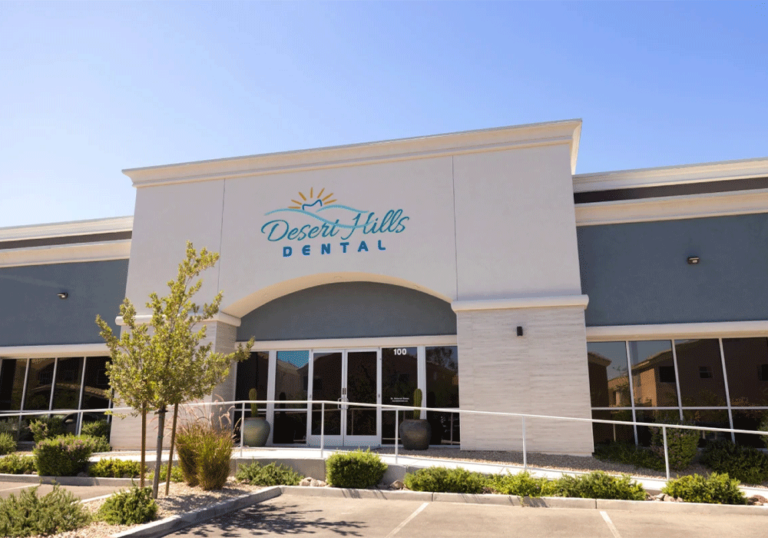
If it has been more than six months since your last cleaning, or your gums bleed when you brush, come see us. We are at 6740 S Fort Apache Rd, Ste 100, in Southwest Las Vegas, open Monday through Thursday 7am to 4pm and Friday 8am to 1pm. Call (725) 307-5569 or request a visit through the contact page.
Frequently Asked Questions
How do I know if I need a deep cleaning instead of a regular cleaning?
You cannot tell on your own, which is why we measure gum pockets at every exam. Bleeding when you brush, persistent bad breath, and gums that look red or pulled away from the teeth are warning signs, but the probe readings and X-rays make the call. If your pockets measure four millimeters or deeper with tartar below the gumline, we will recommend scaling and root planing and show you the exact numbers.
Does a deep cleaning hurt?
We numb the areas being treated, so the appointment itself should not hurt. Afterward, gums can feel tender for a few days and teeth may react to cold. Warm salt water rinses and an over-the-counter pain reliever handle it for most patients. We usually split treatment into two visits so you are never numb on both sides of your mouth at the same time.
Can I just get a regular cleaning even if I have gum disease?
A regular cleaning polishes above the gumline while the infection keeps working underneath, so it does not solve the problem. Untreated gum disease breaks down the bone that holds your teeth in place, and that bone does not grow back on its own. We would rather treat pockets early with scaling and root planing than watch them deepen year after year. We will always show you the findings and let you decide.
How often will I need cleanings after a deep cleaning?
Most patients switch to periodontal maintenance visits every three to four months instead of the standard six. The shorter interval keeps bacteria from rebuilding inside the pockets while your gums heal. In a dry climate like Las Vegas, where reduced saliva lets plaque harden faster, staying on that schedule matters even more. If your gum measurements hold steady over time, we may be able to stretch the interval back out. For patients with healthy gums, we explain how we set the schedule in how often you should really get a dental cleaning.
What if I do not have dental insurance?
You still have options at our office. The Desert Hills Dental Complete care plan is a flat-fee membership that covers routine exams, cleanings, and X-rays and gives a discount on other treatment. We also accept CareCredit and Cherry financing, and every patient receives a written treatment plan with costs listed up front. When needed, deep cleaning can be phased over multiple visits to spread out the expense.
Where to Next
Cleanings are where problems get caught early. These cover what happens when one gets missed.
- Dental Crowns in Las Vegas: Complete Guide to Restoration Options, crowns, and the damage that leads to them.
- Best Dentist Near Me in Summerlin: Your Local Expert Guide, choosing a Summerlin dentist who catches things early.